Subscribe

 Published on Sep 1, 2026 by Jake Heyen
 STRIV is taking a different approach to the running wearable. Instead of measuring training from the wrist, the company’s new smart insoles collect movement data directly beneath a runner’s feet.
The thin sensing layer sits underneath your shoe’s existing insole, using 256 pressure sensors (128 beneath each foot), along with motion sensors to track how a runner lands, moves through each step, and pushes off the ground.
Once the insoles are connected, STRIV tracks each step throughout a run. The system measures things like pressure underfoot, landing forces, pronation, contact time, and differences between the left and right foot.
Rather than reducing an entire workout to one average, STRIV also looks at how those measurements change as the run progresses. That allows the system to learn a runner’s normal movement patterns and identify shifts that appear as training load and fatigue build.
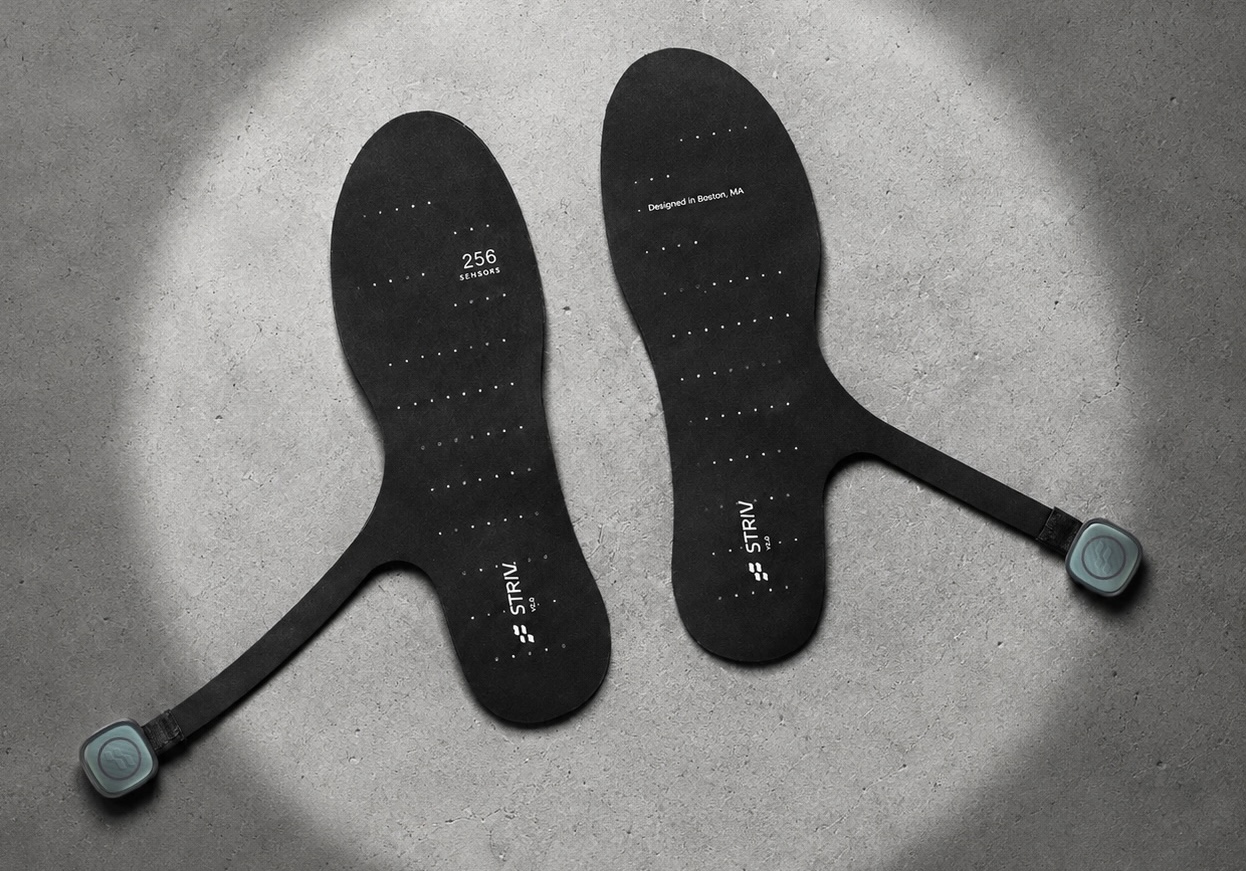
The thin insoles use 256 pressure sensors to measure how each foot interacts with the ground.
The idea is to give runners access to information that has traditionally required a biomechanics lab. STRIV has tested its measurements against Bertec force-plate treadmills, comparing data including ground reaction force, contact time, loading rate, and loading time. On its site, the company says its validation included more than 40,000 steps across 23 runners.
The hardware is designed to last one and two weeks per charge and fit beneath the existing insole of most running and training shoes. STRIV also covers the insoles for 500 miles, roughly the lifespan the company uses for a pair of running shoes.
All of that data feeds into the STRIV app, where each run is translated into scores for form, intensity, and musculoskeletal load. Runners can see longer-term patterns, compare their left and right sides, and track movement changes around their individual training goals.

The system tracks every step, then translates the data into form, intensity, and load insights.
STRIV also built an AI coach called Ace to make the data more useful during training. Ace uses a runner’s movement, training history, and goals to provide personalized feedback after a workout, with real-time coaching cues available through headphones while they run.
That makes STRIV less about adding another dashboard of running metrics and more about showing runners what their body is actually doing as the miles add up. Instead of only knowing how fast or hard they ran, they can see whether their movement changed along the way.
STRIV is available to reserve for $49 toward a $399 total purchase price, with the first production release expected to ship at the end of September 2026. No subscription is required for run tracking, form and load scores, or training history, although STRIV plans to offer an optional advanced AI coaching tier.