Subscribe


 Published on Apr 15, 2026 by Joana Ariza
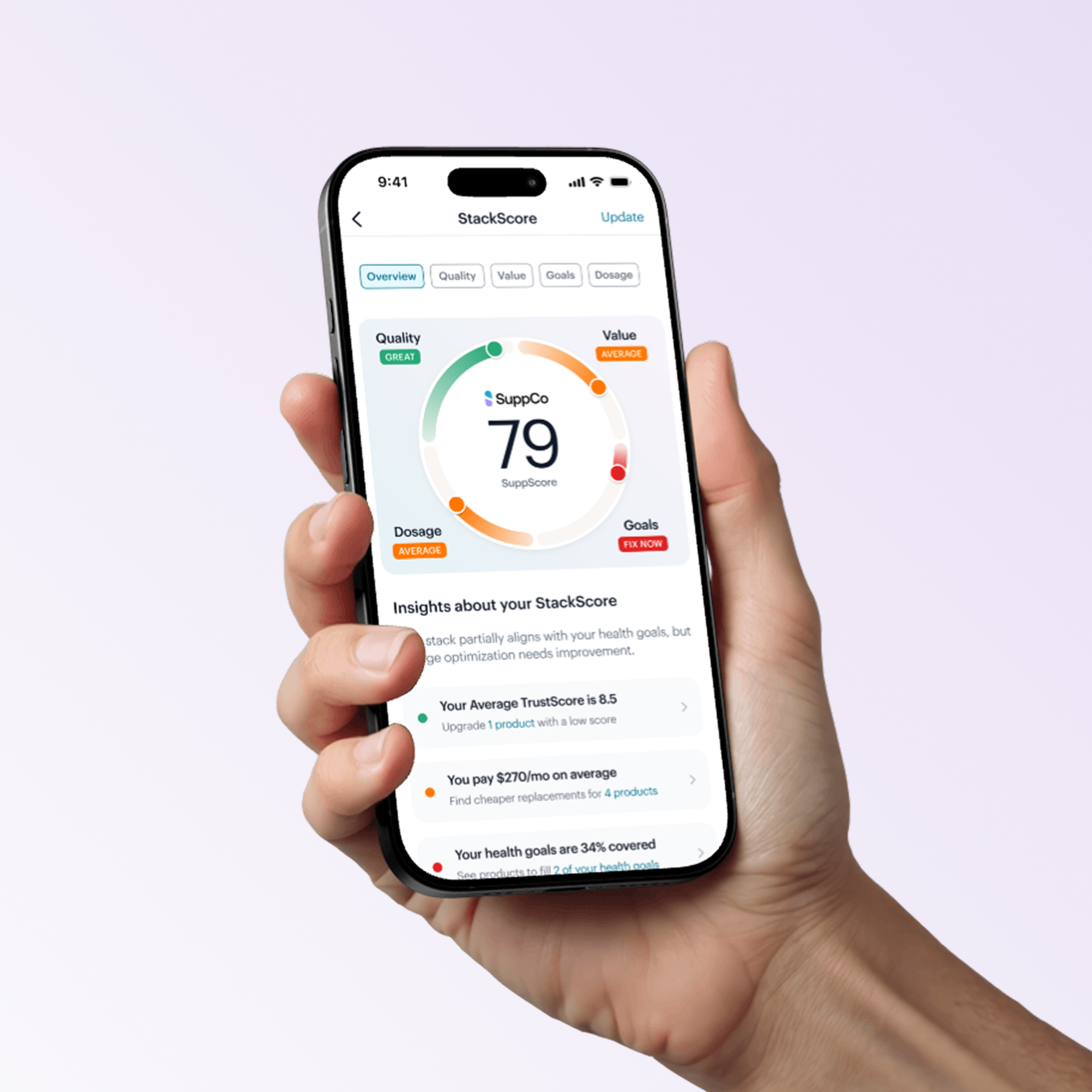
 SuppCo is a supplement-tracking app that allows users to build, log, and optimize their daily routines. With a database of over 250,000 products and a TrustScore algorithm that rates brands across 29 quality attributes, the platform has a unique data set: what health-conscious people are actually taking every day, tracked over time.
The 10 most-stacked products of 2026 so far, ranked by unique users, are:
Seed DS-01 Daily Synbiotic (2-in-1 Probiotic) – SuppCo TrustScore
Sports Research Vitamin D3 125 mcg + K2 100 mcg – SuppCo TrustScore
Thorne Creatine – SuppCo TrustScore
Pure Encapsulations Magnesium Glycinate – SuppCo TrustScore
Thorne Super EPA – SuppCo TrustScore
Revive Magnesium Glycinate – SuppCo TrustScore
Orgain Creatine Monohydrate Micronized (Unflavored) – SuppCo TrustScore
Vital Proteins Collagen Peptides (Unflavored) – SuppCo TrustScore
Momentous Creatine – SuppCo TrustScore
Nature’s Bounty High Absorption Magnesium Glycinate 240 mg – SuppCo TrustScore
The surprise wasn’t any single product, but the patterns they revealed about consumer habits and where supplement culture is heading in 2026.
SuppCo is a comprehensive supplement scanner and not affiliated with any one brand. Users log what they take, along with personal information like health goals, and the platform rates their stack on quality, dosage, and whether it actually aligns with what they’re trying to accomplish.
It also runs a Secret Shopper program, anonymously purchasing supplements to independently verify that what’s on the label is what’s in the bottle. Those same standards underpin TESTED by SuppCo, a certification program that sends products to ISO 17025 accredited labs to verify that active ingredients match label claims—and publishes the results publicly. Only products that consistently meet or exceed 95% of their label claims earn the certification.
Unlike most brands that rank products based on advertising or affiliate deals, SuppCo data reflects what people consistently choose to take.
Three things stand out when you look at this list as a whole.
Creatine has officially left the gym. It claims three of the top ten spots here, spanning brands with completely different audiences. As the science on creatine expands from muscle building to cognitive function and healthy aging, consumer habits are shifting right along with it. It’s no longer just for bodybuilders; it’s a mainstream longevity tool. The demographics prove it: nearly a third of SuppCo users stacking creatine are women, and the core user base is in their thirties and forties. And while fitness still may be a major goal for these users, they’re just as likely to take it for everyday energy, overall health, and mental sharpness.
Magnesium is the new multivitamin. We’re seeing three different magnesium glycinate products from three completely different price points. It’s become the go-to reach for stress, sleep, and recovery. Seeing a mass-market option like Nature’s Bounty sitting right next to a practitioner-grade brand like Pure Encapsulations in the top ten shows just how widespread this habit has become. Pure Encapsulations Magnesium Glycinate alone has been added by 25,386 unique users so far in 2026, making it one of the supplements on the list with the biggest upward jump compared to previous years.
Pedigree matters as much as the product. While the top five supplements—targeting gut health, vitamin D, creatine, magnesium, and omega-3s—reaffirm that consumers are prioritizing established interventions over new discoveries, how they are buying them is equally telling. Thorne is the only brand to appear twice in the top tier, claiming spots for both its creatine and omega-3s. For today’s highly engaged consumer, a brand’s rigorous testing and manufacturing standards are no longer just a bonus; they are a prerequisite for entry.
Interestingly, traditional protein didn’t make the list, even though SuppCo data reveals that 55% of creatine users stack it with a protein supplement. Collagen did chart at number eight, but as an incomplete protein, it acts less as a dietary staple and more as targeted support for skin, hair, nails, and joints.
Commonly known hype-driven compounds that recently saturated social media—NMN, NAD+, berberine, ashwagandha, lion’s mane, and colostrum—did not make the list.
Some of these have had enormous cultural moments, yet the data suggests a stark divide between what trends online and actual behavior. Ultimately, the consumers actively optimizing their routines are likely looking past the hype cycle, favoring proven, foundational staples over the latest internet fixations.
The most telling part is how unsurprising the list is. Far from experimental compounds, supplements like vitamin D, creatine, magnesium, omega-3s, and probiotics ranked the highest. These are typically the foundational recommendations practitioners point to, and when you look at why, it makes sense: vitamin D deficiency affects roughly 40% of Americans, magnesium deficiency is similarly widespread, and low omega-3 intake is chronic in Western diets. Their dominance over buzzy, experimental compounds suggests that the modern consumer is less interested in hacking their biology, signaling a broader focus on foundational health.
Seed claiming the top spot fits that picture. DS-01 costs around $50 a month, making it one of the pricier commitments here. Its position suggests that consumers who have done the research to land on a platform like SuppCo treat gut health as foundational, and they’re willing to pay for it. Given how much science connecting the gut microbiome to immunity, metabolism, and mood has matured, it’s not a surprising conclusion.
Most trend reports are based on sales data or search volume. SuppCo draws on real behavior to reveal what health-conscious people consistently put into their bodies over time.
The list skewed toward foundational, evidence-based, and, most would probably say, unglamorous—which may be the most honest picture of what informed supplement users actually look like in 2026.
If you want to know where to start with your own supplement stack, SuppCo can show you how your routine compares.