Subscribe

 Published on Feb 20, 2026 by Joana Ariza
 Women’s health has never had more visibility. Conditions once dismissed are getting more attention, and platforms built specifically for women are multiplying.
And yet Teal Health’s State of Her Health 2026 report suggests the barriers haven’t disappeared—they’ve just shifted.
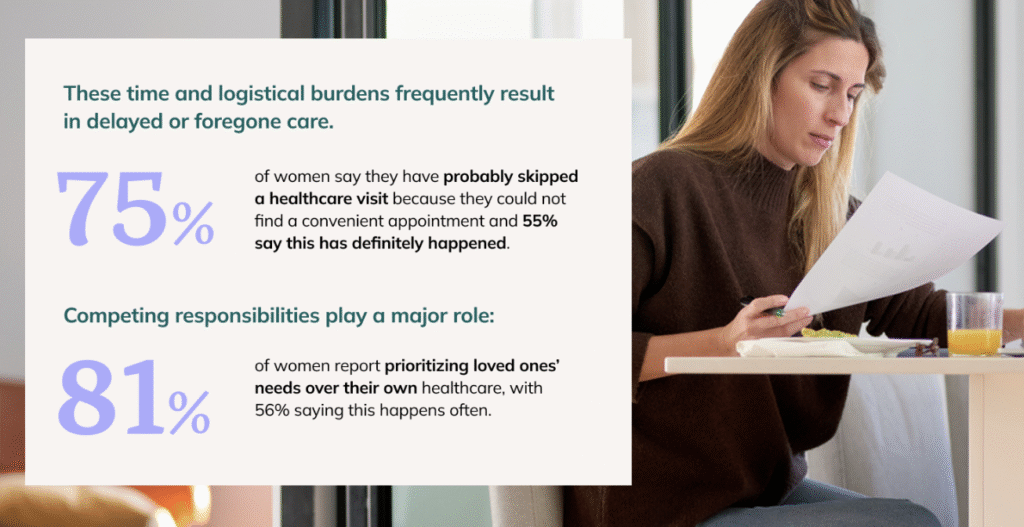
Based on a survey of 516 women across the US, the report found that 75% have skipped a healthcare visit because they couldn’t find a convenient appointment.
Nearly a third say a single primary care or OB-GYN visit takes more than three hours when you account for scheduling, commuting, the wait, the appointment, and getting back to daily life. Over 10% say it takes more than five hours. The report calls it a “time tax”—the cumulative hours women lose to scheduling, commuting, waiting, and following up just to receive basic care.
The more telling number: 81% of women regularly prioritize the needs of loved ones over their own healthcare, with more than half saying it happens often. The women most affected are millennials and those in the “sandwich generation”—simultaneously managing careers, children, and aging parents, with their own care at the bottom of the list.
Most women prioritize loved ones’ needs over their own health.
Access only matters if women have the time and bandwidth to use it, and that shapes which health stages get addressed at all. Menopause is a clear example.
For most of its history, perimenopause has been treated as something to endure rather than manage. As we saw earlier this year, that’s starting to shift, with platforms building tools that reduce friction around hormonal care.
The data suggests many still don’t have access due to logistical burdens and planning. Nearly 60% have had to reschedule appointments due to work or family obligations. One in four women don’t have an OB-GYN they can regularly access. And 61% report difficulty advocating for themselves in appointments. It’s less about health literacy, the report argues, and more about a system that expects women to arrive prepared without telling them how.
Women are reorganizing how they seek healthcare.
Sixty percent say their sources for healthcare information have changed in the past three to five years. Telehealth adoption is at 72%. Demand for at-home screening options is high. And 76% say they want to talk more openly about women’s health topics.
That last number connects to something bigger. The Global Wellness Institute named women’s longevity one of its top wellness trends for 2026, noting that the longevity market—like medicine before it—has been built largely around men, and that era is ending.
We’re far from the current system being built for the realities of most women’s lives, but there’s probably no better blueprint for change than asking women directly what they need—and listening. And historically, that’s where change starts.