Subscribe

 Published on Jan 19, 2026 by Joana Ariza
 Last week, the USDA and HHS released the 2025-2030 Dietary Guidelines for Americans — the first major overhaul in decades.
The biggest visual change is an inverted pyramid that places protein, dairy, and fats at the top, with whole grains at the base. The core message: eat real food, prioritize protein, and minimize ultra-processed products.
Some of these changes reflect current nutrition science, but others are harder to square with what research has shown. Here’s what changed, where the research supports these shifts, and how to potentially apply this information to your own eating.
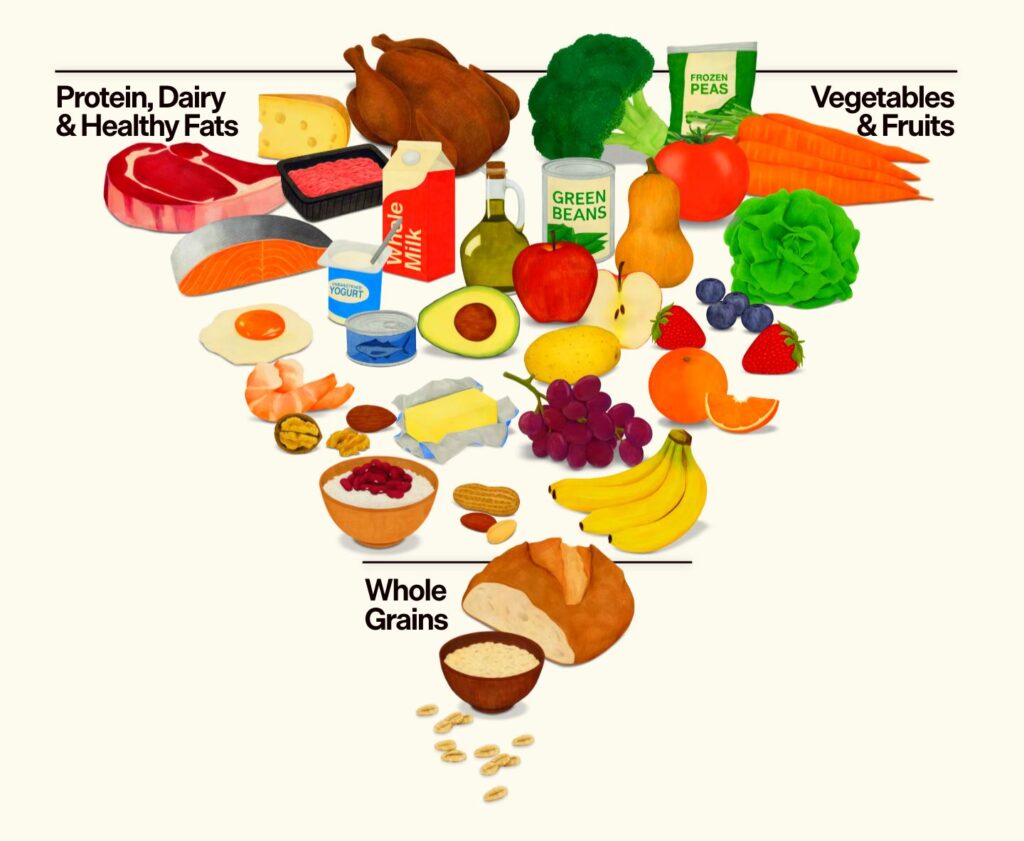
America’s new food pyramid.
The recommended daily allowance for protein increased from 0.8 grams per kilogram of body weight to 1.2-1.6 grams.
This shift reflects growing evidence that higher protein intake supports muscle maintenance, metabolic health, and healthy aging — outcomes that matter beyond hitting your caloric needs.
For the first time, the guidelines directly call out ultra-processed foods as a category to minimize. The new framework clearly identifies foods engineered with refined oils, synthetic additives, and flavor enhancers as problematic for long-term health.
Dr. Federica Amati, Head Nutritionist at ZOE, notes this change “reinforces the importance of eating mostly minimally processed foods, reducing refined carbohydrates and added sugars, cooking more at home, and paying attention to fiber, gut health and the microbiome.”
This aligns with research linking ultra-processed food consumption to increased risk of cardiovascular disease, type 2 diabetes, and all-cause mortality.
The guidelines moved away from decades of advice promoting low-fat or fat-free products. Healthy fats from olive oil, avocados, nuts, seeds, and fatty fish are now positioned as essential components of a balanced diet.
The inverted pyramid places red meat and full-fat dairy at the top tier, suggesting these foods should form a central part of daily eating. This positioning conflicts with decades of research linking high saturated fat intake (particularly from red and processed meat) to elevated LDL cholesterol and increased cardiovascular risk.
“The science has not fundamentally shifted here,” Dr. Amati explains. “Red meat and full-fat dairy are not forbidden, but they are not risk-free staples either. Portion size, frequency, and the wider dietary pattern remain critical, particularly for heart health.”
Whole grains sit at the narrowest part of the pyramid, which could reinforce the idea that all carbohydrates are problematic. Research consistently shows that whole grains — brown rice, oats, quinoa, whole-wheat products — support gut health, reduce cardiovascular risk, and contribute to healthy aging.
The issue isn’t whole grains, but refined carbohydrates: white bread, sugary cereals, pastries, and other highly processed grain products that make up a large portion of American diets.
The previous guidelines set a specific cap: no more than one to two alcoholic drinks per day. The updated version simply advises to “consume less for better overall health,” without defining what “less” means or providing concrete limits.
Without specific numbers, the guidance becomes harder to interpret. Research consistently links alcohol to increased cancer risk, liver disease, and neurological harm. Vague language doesn’t change those risks.
The updated nutrition advice represents progress in some areas, like the emphasis on whole foods, higher protein intake, and the explicit focus on minimizing ultra-processed products. But the inverted pyramid’s visual hierarchy creates confusion that contradicts established research.
“The guidance works best as a flexible framework rather than a prescriptive rulebook,” Dr. Amati notes. “Age, metabolic health, cardiovascular risk, culture, and access all matter.”
Though you can use these guidelines as a starting point, remember that overall dietary patterns matter more than rigid adherence to any single graphic.