Subscribe

 Published on Oct 9, 2026 by Jake Heyen
 AI health tools have gotten pretty good at answering questions, interpreting data, and helping people navigate care.
Now, one of them is being allowed to write the prescription.
Utah has approved a new pilot from Nolla Health that allows its Nolla Derm app to evaluate adults with mild-to-moderate acne and issue first-time prescriptions for a limited group of topical treatments. It’s a meaningful step beyond AI tools that simply offer advice or help refill an existing prescription.
But the details matter: AI isn’t being given an open prescription pad, and doctors haven’t disappeared from the process.
For eligible Utah residents 18 and older, the process happens through the Nolla Derm app.
Users verify their identity, complete a short intake, and take a five-angle scan of their face. Nolla says the process takes roughly 10 to 15 minutes, after which its system evaluates the information and, if appropriate, creates a treatment plan and prescription. Medication can then be delivered or picked up from a pharmacy.
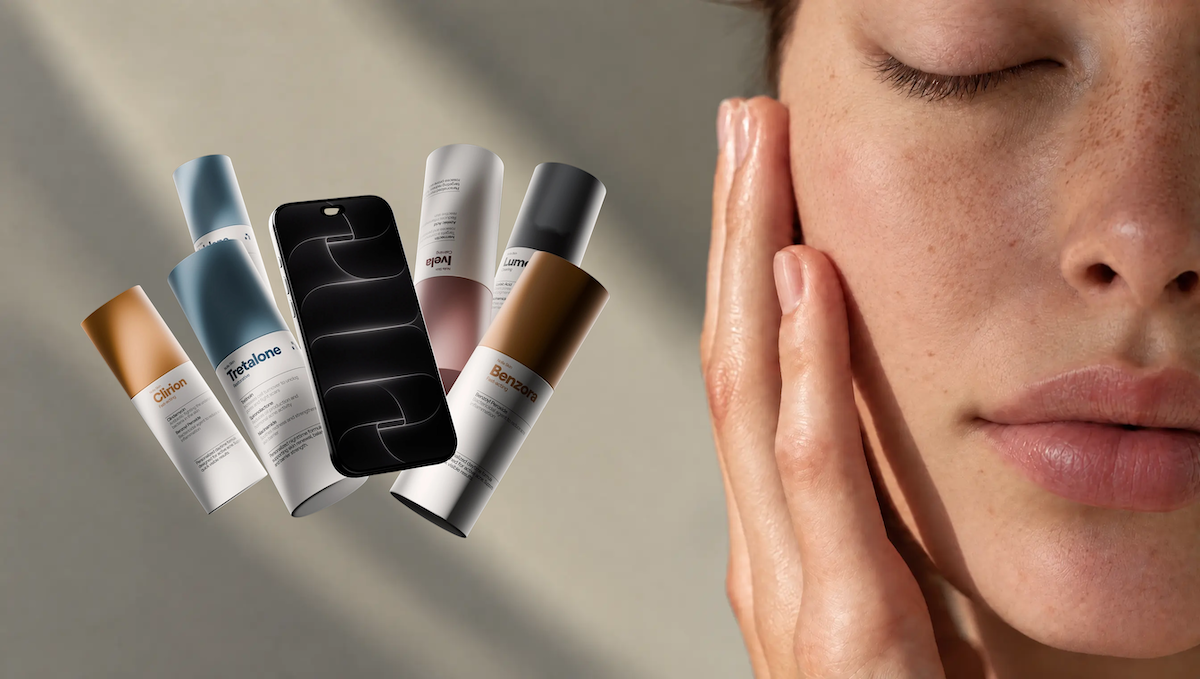
Nolla Derm uses AI to evaluate acne and recommend eligible prescription treatments through its app.
The pilot is intentionally narrow. It covers mild-to-moderate acne and a pre-approved list of topical medications. Oral medications and isotretinoin aren’t included, while cases involving severe acne, pregnancy, breastfeeding, or other specified risk factors are automatically referred to a physician or in-person care.
Users can also message a licensed physician through the app, and Nolla says those messages are answered by a doctor rather than AI.
For the first 100 patients, two Utah-licensed physicians independently review every AI-generated prescription before it reaches the patient.
If Nolla meets the state’s safety requirements, that oversight can gradually decrease, eventually allowing the AI to issue certain prescriptions before a physician reviews them.
That’s what makes the pilot notable. Utah isn’t removing doctors from acne care overnight — it’s testing whether AI can safely take on more of the decision-making over time.
That’s a meaningful step beyond the AI health tools most people have encountered so far.
Instead of simply answering questions or helping with an existing prescription, Nolla can evaluate a new case and initiate treatment within a tightly controlled protocol.
Acne gives regulators a relatively narrow place to test the model: one condition, a defined group of patients, and a limited set of topical treatments.
But if the approach works, the bigger implication goes beyond skincare. AI could increasingly handle routine, protocol-based care while doctors focus on oversight and more complicated cases.
Nolla is starting with acne. The bigger story is whether this model expands from there.